LEICA DS9800 Bond Polymer Refine Detection
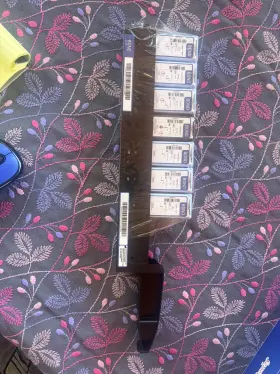
( Brand: Leica ), ( Manufacturer Part Number: DS9800 )
Review LEICA New Bond Polymer Refine Detection System
The Leica DS9800 Bond Polymer Refine Detection system is a state-of-the-art, high-resolution 3D scanning solution designed for the most demanding applications in the semiconductor industry. This system is engineered to deliver unparalleled accuracy, speed, and flexibility for advanced packaging, through-silicon via (TSV), and microelectromechanical systems (MEMS) inspection applications.
At its core, the Leica DS9800 utilizes a unique Bond Polymer Refine (BPR) detection technology. This technology is based on a combination of confocal laser scanning and advanced imaging algorithms, enabling the system to detect even the smallest defects, such as micro-bonds, voids, and delaminations, with exceptional accuracy. The system's high-resolution imaging capabilities allow for the inspection of features as small as 1 micron, making it an ideal solution for the most complex semiconductor designs.
The Leica DS9800 is a versatile system, capable of scanning various types of substrates, including silicon, glass, and other advanced materials. It features a large working volume of up to 300 mm x 300 mm x 200 mm, allowing for the inspection of large wafers or multi-chip modules (MCMs) in a single scan. The system also supports automatic wafer alignment and compensation for temperature and pressure variations, ensuring consistent and reliable results.
The Leica DS9800 Bond Polymer Refine Detection system is designed for easy integration into semiconductor manufacturing workflows. It offers fast scan times, with a maximum scan speed of 1,000 mm/s, enabling high-throughput inspection. The system's intuitive user interface and open data formats make it easy to integrate with other manufacturing tools and data management systems.
Additionally, the Leica DS9800 provides comprehensive data analysis capabilities, including advanced statistical process control (SPC) and reporting tools. These features enable users to quickly identify trends and potential issues, ensuring that corrective actions can be taken in a timely manner.
In summary, the Leica DS9800 Bond Polymer Refine Detection system is a powerful, high-resolution 3D scanning solution designed for the most demanding applications in the semiconductor industry. Its unique Bond Polymer Refine technology, large working volume, and fast scan times make it an ideal solution for advanced packaging, TSV, and MEMS inspection applications. With its easy-to-use interface, open data formats, and comprehensive data analysis capabilities, the Leica DS9800 is a valuable addition to any semiconductor manufacturing workflow.
The Leica DS9800 Laser Scanner with Bond Polymer Refine Detection 2025 is a high-end 3D scanning solution designed for surveying and mapping applications. Here are some pros and cons that can help you make an informed decision about purchasing this device:
Pros:1. High-Resolution Scanning: The Leica DS9800 offers ultra-high resolution scanning, which ensures accurate and precise data acquisition. It is ideal for applications that require detailed surveys and mapping.
2. Fast Scanning Speeds: This laser scanner has a fast scanning speed, which makes it suitable for large-scale projects. It can capture up to 1 million points per second, making data acquisition more efficient.
3. Robust Design: The Leica DS9800 is built to withstand harsh environments. It is dust and waterproof, making it suitable for outdoor use in all weather conditions.
4. Advanced Features: The device comes with advanced features such as refine detection 2025, which ensures accurate point cloud registration and alignment. It also has a built-in GPS receiver, making it easy to collect georeferenced data.
5. Versatile Applications: The Leica DS9800 is suitable for various applications, including infrastructure surveys, topographic mapping, and building surveys.
Cons:1. High Cost: The Leica DS9800 is a high-end laser scanner, and its price reflects its advanced features and capabilities. It may not be affordable for small surveying firms or individual users.
2. Complex Setup: The device may require some technical expertise to set up and operate effectively. It may take some time to learn how to use all the advanced features.
3. Heavy and Bulky: The Leica DS9800 is a heavy and bulky device, making it less portable than other laser scanners in the market. It may require a team to transport and set up the device.
Conclusion:The Leica DS9800 Laser Scanner with Bond Polymer Refine Detection 2025 is an excellent choice for surveying and mapping applications that require high-resolution data and fast scanning speeds. Its robust design makes it suitable for outdoor use in harsh environments, and its advanced features make it versatile for various applications. However, its high cost, complex setup, and heavy weight may make it less accessible to small surveying firms or individual users.
Recommendation:If you are a surveying firm or organization that requires high-resolution data for large-scale projects, the Leica DS9800 is an excellent investment. Its advanced features and capabilities make it suitable for various applications, making it a versatile addition to your surveying equipment. However, if you are an individual user or a small surveying firm with a limited budget, you may want to consider other, more affordable laser scanning solutions.
Details:
New open box condition.
part #: ds9800 prices
- $299.95-$1803.72
specifications quakedental:
- brand: Leica
- manufacturer part number: DS9800
general quakedental:
- condition: New Open box
- Business Industrial > Healthcare, Lab Dental > Other Healthcare, Lab Dental
offer quakedental:
- availability: In Stock
- options: Ship-to-home
- sold: 0
- started: June 25, 2025
- best offers: True
- quantity: 1
shipping quakedental:
- cost: $20.00
- carrier: FedEx
- transit: 3-8 Days
- class: Economy
- type: Fixed
- service: FedEx Ground Economy
seller quakedental:
- city: San Jose, California
- # reviews: 777
- rating: 98.6%
returns quakedental:
- paid by: Buyer
- method: Money back
- policy: Returns Accepted
- time: 30 Days
payments quakedental:
- credit card: Discover
- wallet: Paypal
- other
Leica DS9800 Is Similar To:
- Leica 10450654 Led2000 Incident Light Base New In Original Box (26.2% similar) Part #: Leica 10450654 for sale...(December 13th, 2024)
- Leica S21.4564.a Bond Universal Slide Labels And Printing Ribbon S21.4564 3000 (39.1% similar) The Leica bond universal slide labels printing ribbon S21.4564 is a high-quality labeling solution designed for use in various laboratory settings such as physical, microbiological, and biological laboratories. Whether you are working in a research setting or diagnostic lab, this product ensures...(August 20th, 2025)

4 offers $299.95–$1803.72 USD
- New – Open box. Offer #1 priced at $799.00 + $20.00 delivery = $819.00* total. New open box condition.+$20.00 shipping
- New. Offer #2 priced at $299.95 + $20.00 delivery = $319.95* total. The system is biotin-free. Small multifunctional linkers enhance tissue penetration, producing unsurpassed sensitivity.+$20.00 shipping
- Used. Offer #3 priced at $1803.72 + $33.78 delivery = $1837.50* total. +$33.78 shipping
- New – Open box. Offer #4 priced at $999.00 + $0.00 delivery = $999.00* total. FREE SHIPPING