FISHERBRAND 22-260-943 Hep Tubes Vial
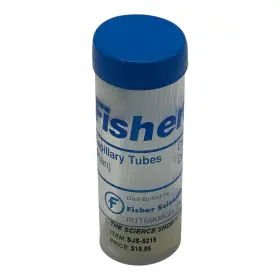
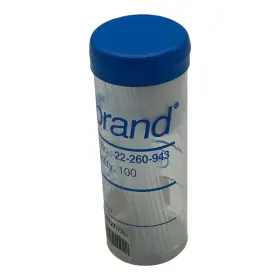

( Brand: Fisherbrand ), ( Part Type: Tube Vial ), ( Manufacturer Part Number: 22-260-943 )
Review FISHERBRAND #22-260-943 Blue Band Non hep Capillary Tubes Vial Of 100
The Fisherbrand 22-260-943 Non-Heparinized Glass Vials are ideal for various scientific applications where the use of heparinized containers is not necessary. These vials, manufactured by Fisher Scientific, are crafted from borosilicate glass, which is known for its exceptional durability and resistance to thermal shock. This makes them suitable for a wide range of laboratory processes, including centrifugation, filtration, and storage.
Each vial has a non-heparinized finish, ensuring that no unwanted anticoagulant is introduced into the samples housed within. With a nominal volume of 15 mL, these vials offer ample space for various liquid samples. The borosilicate glass material also imparts excellent transparency, enabling easy visual inspection of samples, and the vials are lightweight for ease of handling.
These Fisherbrand vials are designed with a tough, $rim marks providing precise volume measurements, ensuring accurate and consistent results. They are also resistant to both acidic and basic conditions, extending their versatility in various laboratory applications. Moreover, they are stackable, maximizing space utilization in laboratory storage and transport.
Fisherbrand's 22-260-943 Non-Heparinized Glass Vials undergo rigorous quality assurance testing to meet or exceed relevant industry standards. They are suitable for use in various fields, including research laboratories, biotech, clinical, and educational institutions. With their reliable performance, excellent clarity, and versatile capabilities, these vials are an essential addition to any laboratory inventory.
Fisherbrand 22-260-943 Non-HEP Tubes: Pros, Cons, and Concluding Recommendation
The Fisherbrand 22-260-943 Non-HEP (Heparin-coated) tubes are widely used in the laboratory for collecting and transporting blood samples without the use of anticoagulants like heparin. Here are the pros and cons of buying these tubes, followed by a concluding recommendation.
Pros:1. Non-HEP tubes eliminate the need for heparin, making them ideal for samples that cannot be anticoagulated or have a risk of heparin contamination.
2. These tubes may be more suitable for certain assays, such as the measurement of certain plasma coagulation factors, since heparin can interfere with these measurements.
3. They can increase sample stability by allowing clotting, reducing potential issues with ongoing coagulation, and facilitating separation of serum from clots (which can be useful for clot-based assays).
4. The non-HEP tubes offer a cost-effective solution since they eliminate the need to purchase additional heparinized tubes for all samples.
Cons:1. In some cases, degranulation of platelets can occur in non-HEP tubes, leading to inaccurate platelet counts in clinical laboratories. To mitigate this issue, the samples should be gently inverted several times during transport and allowed to clot before centrifugation.
2. The samples from non-HEP tubes need to be processed appropriately and sooner as compared to heparinized tubes due to their tendency for clotting, which can require additional time and effort for the laboratory staff.
3. Proper labeling of the tubes is essential to prevent potential mix-ups with heparinized tubes, reducing the overall efficiency in the laboratory workflow.
Conclusion:With their advantages of eliminating the need for heparin and potential cost savings, Fisherbrand 22-260-943 Non-HEP tubes are an excellent addition to a laboratory's inventory, especially when dealing with specific sample types, such as those incapable of being processed with heparin. However, proper handling and timely processing are critical to mitigate any potential issues due to clotting. In summary, the use of Fisherbrand 22-260-943 Non-HEP tubes offers distinct benefits, but it requires enhanced attention to procedure andxiGjip;ev;e;erity. To optimally employ these tubes, proper labeling, efficient workflow organization, and good communication within the laboratory team are essential.
Recommendation:If your laboratory performs a high volume of tests that must be free from anticoagulants or heparin interferences, investing in Fisherbrand 22-260-943 Non-HEP tubes can provide considerable benefits, such as enhanced precision, streamlined sample separation, and potential cost savings. Ensure that your laboratory team is well-equipped with appropriate handling procedures and clear labeling to guarantee accurate test results and maintain a well-organized workflow.
Details:
FisherBrand #22-260-943 Blue Band Non-Hep Capillary Tubes 1 Vial of 100.
part #: 22260943 prices
- $19.95-$54.95
specifications quakedental:
- brand: Fisherbrand
- part type: Tube Vial
- manufacturer part number: 22-260-943
shipping quakedental:
- transit: 5-12 Days
- service: USPS First Class
- type: Calculated
- cost: $0.00
- carrier: USPS
- class: Standard
seller quakedental:
- rating: 100.0%
- city: Santa Clara, California
- # reviews: 3609
payments quakedental:
- credit card: Discover
- wallet: Google-pay
- other
general quakedental:
- condition: New
- Business Industrial > Healthcare, Lab Dental > Other Healthcare, Lab Dental
offer quakedental:
- options: Ship-to-home
- availability: In Stock
- sold: 0
- quantity: 1
- started: January 3, 2025
returns quakedental:
- policy: Returns Accepted
- paid by: Seller
- time: 30 Days
- method: Money back
Fisherbrand 22-260-943 Is Similar To:
- Fisherbrand 13-247-25 Fisher Brand Scientific Incubator Rotisserie Only For 10 20 35mm Tubes (37.9% similar) Fisher brand scientific 13-247-25 incubator rotisserie only for 10/20 35MM tubes appears in good used condition externally. See pics, nothing else included. Dual chamber incubator oven shown in last photo, listed separately, not incl...(December 10th, 2024)

2 offers $19.95–$54.95 USD
- New. Offer #1 priced at $19.95 + $0.00 delivery = $19.95* total. FisherBrand # Blue Band Non-Hep Capillary Tubes 1 Vial of 100.FREE SHIPPING
- New. Offer #2 priced at $54.95 + $0.00 delivery = $54.95* total. 12 Vials of 100. Capillary Tubes.FREE SHIPPING