QIAGEN 1112323 Mini Spin Columns Qiaquick Pcr Purification Kit 48/CS
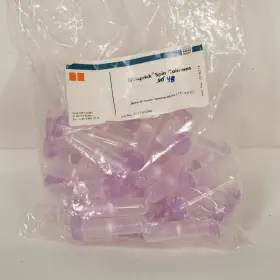
( Brand: Qiagen ), ( Manufacturer Part Number: 1112323 ), ( Country Of Origin: United States ), ( Intended Use/discipline: Biological Laboratory )
Review QIAGEN Mini Spin Columns Qiaquick Pcr Purification Kit 48/cs
The QIAGEN Mini Spin Columns for the QIAquick PCR Purification Kit (Catalog Number: 1112323, 48-well format, CS design) are a crucial component in the process of purifying PCR products or amplified DNA fragments for downstream applications. These columns are engineered to provide efficient and high-capacity purification of PCR reactions, ensuring the removal of excess primers, dNTPs, and unincorporated PCR reagents for enhanced product yield and purity.
The Mini Spin Columns are part of the QIAquick PCR Purification Kit, which offers a simple, one-step method for purifying PCR products directly from the reaction tube without the need for additional centrifugation steps. The CS design (Column Spin) of these columns allows for the easy handling of multiple samples at once, as they can be processed in a 48-well plate format.
Each Mini Spin Column measures approximately 12.4 mm in length, 10.6 mm in width, and 1.6 mm in height. They are made of hydrophilic polyethersulfone (PES) membrane, which provides excellent binding capacity and selectivity for purifying double-stranded DNA. The columns have a binding capacity of up to 10 g of DNA per column, allowing for the purification of a wide range of PCR reactions.
To use the Mini Spin Columns, simply add the PCR reaction to the column, followed by the addition of 50 L of QIAquick PCR Purification Buffer. The sample is then centrifuged at 6,000 x g for 1 minute to initiate the binding process. After removing the flow-through, the column is washed with 75 L of QIAquick Wash Buffer, followed by an additional centrifugation step. Finally, the purified DNA is eluted with 50 L of Elution Buffer and centrifuged for 1 minute at 6,000 x g to collect the eluate.
These Mini Spin Columns are compatible with various PCR systems and thermocyclers, making them a versatile choice for laboratories performing PCR purification routinely. Additionally, they are suitable for use with various downstream applications, such as sequencing, cloning, and real-time PCR analysis.
In summary, the QIAGEN Mini Spin Columns for the QIAquick PCR Purification Kit (Catalog Number: 1112323, 48-well format, CS design) are a valuable tool for efficiently and effectively purifying PCR products and amplified DNA fragments. Their high binding capacity, ease of use, and compatibility with various downstream applications make them an essential component in any molecular biology or PCR laboratory.
QIAGEN Mini Spin Columns for QIAquick PCR Purification Kit 48/CS are commonly used for purifying PCR products or amplified DNA fragments. Here are some pros and cons of buying these columns:
Pros:1. High Binding Capacity: Each column can bind up to 48 samples, making it an ideal choice for large-scale purifications.
2. Easy to Use: The QIAquick PCR Purification Kit with Mini Spin Columns is known for its user-friendly protocol. The spin columns allow for quick and efficient purification, with minimal hands-on time.
3. High Recovery Yield: These columns provide high DNA recovery yields, which is crucial for downstream applications like sequencing, cloning, or quantification.
4. Robust: The QIAquick PCR Purification Kit is a well-established method with a proven track record in various research and diagnostic applications.
5. Versatile: These columns can be used with a wide range of PCR systems and thermocyclers, increasing their overall versatility.
Cons:1. Cost: QIAGEN Mini Spin Columns are more expensive compared to other PCR purification methods like silica-based spin columns.
2. Limited Sample Volume: Each column can only process a maximum volume of 250 L. This might limit its use for large PCR reactions or when dealing with low template concentrations.
3. Requires Centrifugation: The spin columns necessitate centrifugation for efficient binding and elution of purified DNA, which might not be possible in all laboratory settings.
In conclusion, the QIAGEN Mini Spin Columns for QIAquick PCR Purification Kit 48/CS offer several advantages, including high binding capacity, ease of use, high recovery yield, and robustness. However, they come with some disadvantages, such as cost, limited sample volume, and the requirement for centrifugation.
If you frequently work with large sample volumes or require a more cost-effective option, alternative PCR purification methods like silica-based spin columns or other purification kits might be more suitable. However, if you value the high recovery yields, ease of use, and proven track record of the QIAquick PCR Purification Kit, the investment in these columns may be worthwhile.
Details:
part #: 1112323 prices
- $39.00-$152.00
specifications quakedental:
- brand: Qiagen
- manufacturer part number: 1112323
- country of origin: United States
- intended use/discipline: Biological Laboratory
returns quakedental:
- method: Money back
- time: 30 Days
- policy: Returns Accepted
- paid by: Buyer
general quakedental:
- condition: New
- Business Industrial > Healthcare, Lab Dental > Other Healthcare, Lab Dental
payments quakedental:
- credit card: Visa
- wallet: Google-pay
- other
- cash
shipping quakedental:
- cost: $0.00
- transit: 4-7 Days
- type: Fixed
- class: Standard
- service: USPS Ground Advantage
- carrier: USPS
seller quakedental:
- city: Bradenton, Florida
- # reviews: 3794
- rating: 100.0%
offer quakedental:
- options: Ship-to-home
- quantity: 1
- sold: 0
- started: May 28, 2026
- availability: In Stock
Qiagen 1112323 Is Similar To:
- Qiagen 990352 Filter Tips 1000 L Wide Bore For Qiasymphony Qiacube 1024 (36.4% similar) Full unopened case of tips. With the trusted Qiagen brand behind them, these filter tips are a reliable and essential tool for any lab seeking precision consistency in their work. The wide bore design allows for easy dispensing and filtration, ensuring accurate efficient results...(March 22nd, 2025)
- Qiagen 19621 New Plasmid Maxi Kit 10 Cat No 12162 For 19781 Mega Cartridges (28% similar) All buffers and solutions are full with original amounts. Only 9 tips included. See photos for further details. 12162 for 1978 1 mega cartridges. New Qiagen plasmon maxi kit 10. New open box...(December 12th, 2025)

2 offers $39.00–$152.00 USD
- New. Offer #1 priced at $39.00 + $0.00 delivery = $39.00* total. FREE SHIPPING
- New – Open box. Offer #2 priced at $152.00 + $0.00 delivery = $152.00* total. FREE SHIPPING